This blog was developed as a place for discussion about our great Republic, the Founding Fathers and their wisdom, and everything that makes America great.
On August 5, 1861, President Abraham Lincoln imposed the
first federal income tax on American citizens when he signed the Revenue Act.
The Northern states were strapped for cash and Lincoln needed more money to
continue their war against the Southern states. This was Lincoln and Congress’s
solution to their money woes by imposing a 3 percent tax on all incomes over
$800 ($16,000 by today’s standards). The new income tax went into effect the
following year.
Before the income tax, the federal government earned its
revenues on import taxes called “tariffs.” The first thing Lincoln and the
Republican Party did after his inauguration was to pass the Morrill Tariff Act
in 1861, which raised the tax on specific manufactured goods from 30 to 250
percent. The agrarian states in the south and western farmers in the North
relied heavily on manufactured goods and felt that this new tax was an abuse of
the federal government’s powers. As we know, in response to this abuse the
South went so far as to secede from the union of states.
The North lost revenues when the South they seceded,
which accounted for around 80 percent of the federal revenues. We then can
understand why the North would start a war to force the South back into the
union. This fact is also evident in Lincoln’s response to the question of why
the North should not let the south go:
“Let the South Go? Let the South go! Where then shall we
get our revenues!” (Semmes, 1987)
This begs the question, what were the thoughts and
opinions of our citizens in the individual states prior to the new income tax?
The New York Herald published the
following on September 1, 1862 (the day the income tax came into effect):
“To-day begins a new era of this country. Beyond a few
local and state taxes, which were felt by none but owners of real estate, this
country has never been taxed before. We have jogged along quietly and
comfortably, and have amused ourselves greatly by laughing at the over taxed
people of England, where a man is taxed from the cradle to the grave; where
light, heat and water are taxed, and where not only every rich man, but even
the poorest peasant, is obliged to pay largely to the privilege of bad
government….” (Crocker III, 2008)
It would appear that the states in the union prior to
income tax were far greater off than the states today with all the fraud,
waste, and abuse in our federal government. In fact, we now appear to be on par
with the poor English people as described by the New York Herald.
Why would so many people in the Union accept such a
change in taxes? The Herald did go on
to praise the newly proposed income tax:
“The effect of the tax will be to deepen public
sentiment. The people will be less ready to excuse the mistakes of our
government and our generals…The war will be better conducted, for every man, having
to pay his money towards carrying on the war, will insist and assist that it
shall be properly prosecuted and speedily and gloriously conducted.”
It would appear that, like with many things, the people
have been duped by the media. This is not a new phenomenon, but something that
has been going on for many years. There is no evidence that income taxes have “deepen
public sentiment” one bit in America. It is also difficult for the tax payer
today to even know where their money is being spent to “insist and assist that
it shall be properly prosecuted.”
I say it is time that we stop paying for Mr. Lincoln’s
war and put the federal government back on the short leash they had before
1862. It is clear that they have proven irresponsible with our hard earned
money. It is time that we stop paying into the incompetent big government
system.
Works Cited
Crocker III, H. W. (2008). The Politically Incorrect
Guide to the Civil War. Washington D.C.: Regnery Publishing, Inc.
Semmes, R. (1987). Memoirs of Service Afloat.
Secaucus, NJ: The Blue and Gray Press.
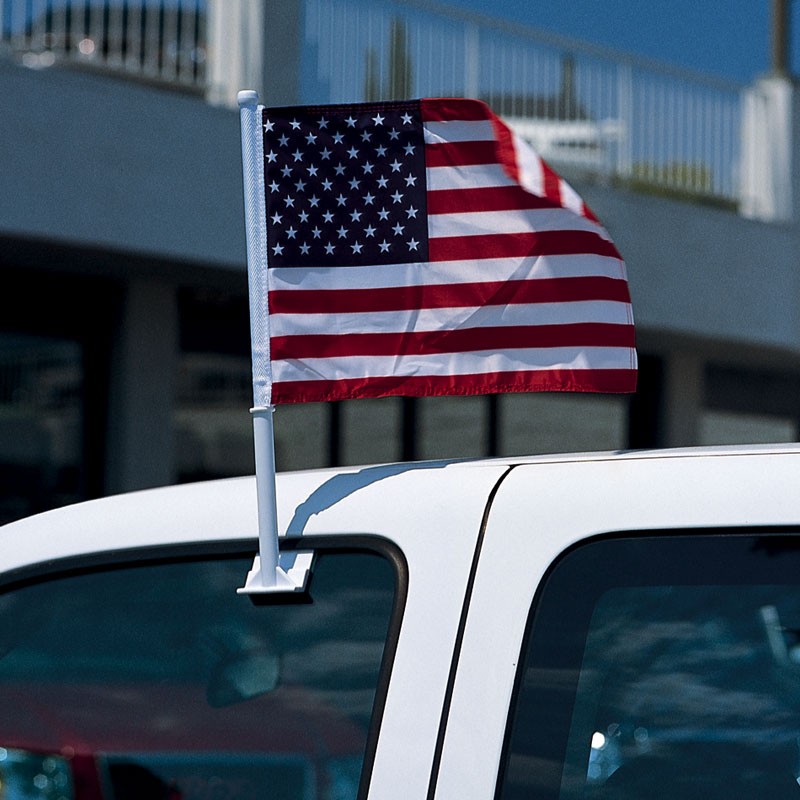
It is the day to "Remember 9/11" again. America does remember this day pretty well, but what of other days? Immediately after the attack on the two towers, American flags were seen everywhere. Flags were proudly waving outside houses, businesses, off freeway over passes, on vehicles etc.
Then the Lakers went to the playoffs. I remember seeing those American flags quickly disappear not long after the attacks.
So, how well do we remember? Why do we remember? Are we prompted to remember when it serves a purpose? What are those purposes? Why does the government like to remember 9/11, but doesn't want to answer for the attack on Benghazi?
So how well do we remember? Let's take a stroll down memory lane...
Remember Impressment!
Remember when the British government was taking our men and "press ganging" them into the service of the Royal Navy against their wills to fight in their imperialistic wars? Oh it began as early as the 1660s, but it was one of the main reasons President James Madison declared war on them in 1812. Do you remember that atrocity?
Remember the Whiskey Rebellion!
Remember the Whiskey Rebellion in 1791 when farmers rebelled against a new tax impossed on the whiskey they made from their leftover grain and corn? It was a tax designed by the treasury secretary Alexander Hamilton to increase the power of the central government.
500 armed men attacked the home of tax inspector General John Neville. A militia of 13,000 men were sent to suppress the insurgency. The rebels disbanded. Despite 20 arrests, all were either acquitted or pardoned. In the end, there were approximately 16 deaths related to this event.
Remember the Barbary Pirates!
Remember when the Barbary corsairs and crews from Algiers, Tunis, Tripoli, and Morocco were capturing our merchant ships, enslaving American sailors, and were demanding tributes and ransoms so that we could be afforded safe passage through the Mediterranean? Well, the Barbary Wars led to our current policy of not negotiating with terrorists, so you should.
Remember the Chesapeake-Leopard Affair!
Remember when the British vessel, HMS Leopard attacked the USS Chesapeake off the coast of Virginia on 22 June 1807? This British ship attacked and boarded our ship in search of deserters from the Royal Navy. They killed four of our sailors, wounded 17 and captured four men. Again, another reason we went to war with them in 1812.
Remember the Nat Turner Rebellion!
Remember when Nat Turner, a slave, led more than 70 enslaved and free blacks in an attack to "kill all the white people" in Southampton County, Virginia during the month of August, 1831? Nat Turner was taught to read and instructed in the principles of the Bible. He became a preacher for his people and used the word of God to kill anywhere from 55 to 65 white men, women, and children.
Remember the Alamo!
Remember when Mexican troops under President General Antonio Lopez de Santa Anna launched an assault on the Alamo Mission near San Antonio de Bexar in 1836 on a 13-day siege that ended in the deaths and wounding of around 600 Americans?
Remember the 1838 Mormon War!
Remember when war was declared on Mormons by the Governor and citizens of the state of Missouri in 1838? At least 21 Mormons were killed by the Missourians at such places as Haun's Mill and an unknown number of non-combatants died due to exposure and hardship as a result of being expelled from their homes in Missouri. With Governor Lilburn Bogg's extermination order, nearly an estimated ten thousand Mormons were forced to leave the state and settled in what would become Nauvoo, Illinois.
Remember John Brown's Raid on Harpers Ferry!
Remember when John Brown attempted to start an armed slave revolt in 1859 by seizing a United States arsenal at Harpers Ferry, Virginia? His attack resulted in the death and wounding of one U.S. Marine. Additionally, he was responsible for the death of six civilians and the wounding of nine others. John Brown told the court that not only was he willing to give his life to free the slaves, he was willing to give the lives of millions to free the slaves.
Side note, before the War Between the States, at least a dozen nations peacefully emancipated their slaves. The British went as far as to raise money to purchase the slaves freedom from their masters. Clearly, there was no need for such violence or bloodshed, if the war was truly only about freeing slaves.
Remember the Maine!
Remember when the USS Maine was lost in Havana Harbor on the evening of 15 February 1898? She was sent to protect U.S. interests during the Cuban revolt against Spain and exploded suddenly without warning and sank, killing nearly three quarters of her crew. The cause still remains the subject of speculation, but "remember the Maine, to Hell with Spain!"
Remember the Los Angeles Times Bombing!
Remember when a union member belonging to the International Association of Bridge and Structural Iron Works detonated a bomb at the Los Angeles Times on October 1, 1910, which resulted in the deaths of 21 people and the wounding of over a 100?
Remember the Battle of Columbus!
Remember when Pancho Villa led his Division of the North on an assault of the boarder town of Columbus, New Mexico on March 9, 1916 that resulted in the deaths and wounding of over 80 American lives?
Remember the Black Tom Bombing!
Remember the act of sabotage by German agents to prevent ammunition supplies from being used by the Allies in World War Iin Jersey City, New Jersey on July 30, 1916? Seven people were killed.
Remember the Attack on Orleans!
Remember when a German U-boat opened fire on the town of Orleans, Massachusetts and several merchant vessels nearby on July 21, 1918? The submarine was responsible for the sinking of one tugboat and four barges.
Remember the Wall Street Bombing!
Remember the Wall Street bombing that occurred on September 16, 1920? The blast killed 38 and seriously wounded 143 people. The bombing was never solved.
Remember the Bath School Disaster!
Remember when Andrew Kehoe violently attacked children, his wife, fire-bombed his farm and set off a major explosion in the Bath Consolidated School before killing himself in Bath Township, Michigan on May 18, 1927? He killed 38 school children and six adults and injured at least 58 other people.
Remember the 7th!
Remember when the Japanese bombed Pearl Harbor on December 7, 1941?
Remember the United States Capitol Shooting (1954)!
Remember when four Puerto Rican nationalists fired 30 rounds from the Ladies' Gallery of the House of Representatives chamber in the United States Capitol on March 1, 1954?
Remember the 16th Street Baptist Church Bombing!
Remember when a racially motivated terrorist bombing was carried out on the 16th Street Baptist Church in Birmingham, Alabama that killed four girls on September 15, 1963?
Remember the Pueblo!
Remember when North Korean forces attacked and captured the USS Pueblo in international waters on January 23 1968, which resulted in several deaths and injuries of American sailors? The surviving crew were taken prisoner and held for 11 months. On December 23, 1968, 82 American sailors were released.
Remember EC-121M!
Remember when a North Korean MiG-17 shot down a U.S. Navy EC-121M Warning Star on a reconnaissance mission in international waters on April 15, 1969 killing all 31 Americans on board?
Remember the Kent State Shootings!
Remember when the Ohio National Guard fired 67 rounds into a group of unarmed college students exercising their first amendment right protesting the war on May 4, 1970, which resulted in the death of four students and the injury of nine others?
Remember the 1983 U.S. Embassy Bombing!
Remember the suicide bombing of the U.S. embassy in Beirut, Lebanon that killed 63 people on April 18, 1983?
Remember the Beirut Barracks Bombings!
Remember when the Multinational Force in Lebanon attacked the Beirut Barracks with two truck bombs housing U.S. and French military forces resulting in the deaths of 299 service men?
Remember the Oklahoma City Bombing!
Remember when Timothy McVeigh attacked the Alfred P. Murrah Federal Building in downtown Oklahoma City on April 19, 1995? The bombing claimed 168 lives and injured more than 680 people.
Remember the CIA Headquarters Shootings!
Remember when Mir Qazi, a man "angry with the policy of the U.S. government in the Middle East, particularly toward the Palestinian people," attacked CIA employees outside CIA headquarters in Langley, Virginia on January 25, 1993? He killed two and injured three others.
Remember the 1993 World Trade Center Bombing!
Remember when a truck bomb detonated below the North Tower of the World Trade Center in New York, NY on February 26, 1993? Ramzi Yousef and co-conspirators killed six and injured 1,042 people.
Remember the Cole!
Remember the al-Qaeda attack on the USS Cole in the Yeman port of Aden on October 12, 2000 that resulted in the death of 17 sailors and the injuring of 39 others?
This is just a few days and events that should be remembered by Americans. How many did you know about or remember? So, when we remember the events that took place 12 years ago, let's not forget the other important events. Or...we just might see them repeated.
I
know many people have a great deal of difficulty comprehending just how
many wars are started for no other purpose than to force private
central banks onto nations, so let me share a few examples, so that you
understand why the US Government is mired in so many wars against so
many foreign nations. There is ample precedent for this.
The
United States fought the American Revolution primarily over King George
III's Currency act, which forced the colonists to conduct their business
only using printed bank notes borrowed from the Bank of England at
interest. After the revolution, the new United States adopted a
radically different economic system in which the government issued its
own value-based money, so that private banks like the Bank of England
were not siphoning off the wealth of the people through interest-bearing
bank notes.
But bankers are nothing if not dedicated to their schemes to acquire
your wealth, and know full well how easy it is to corrupt a nation's
leaders. Just one year after Mayer Amschel Rothschild had uttered his
infamous "Let me issue and control a nation's money and I care not who makes the laws", the bankers succeeded in setting up a new Private Central Bank called the First Bank of the United States, largely through the efforts of the Rothschild's chief US supporter, Alexander Hamilton.
Founded in 1791, by the end of its twenty year charter the First Bank
of the United States had almost ruined the nation's economy, while
enriching the bankers. Congress refused to renew the charter and
signaled their intention to go back to a state issued value based
currency on which the people paid no interest at all to any banker. This
resulted in a threat from Nathan Mayer Rothschild against the US
Government, "Either
the application for renewal of the charter is granted, or the United
States will find itself involved in a most disastrous war." Congress
still refused to renew the charter for the First Bank of the United
States, whereupon Nathan Mayer Rothschild railed, "Teach those impudent
Americans a lesson! Bring them back to colonial status!"
The British Prime Minister at the time, Spencer Perceval was adamently
opposed to war with the United States,
primarily because the majority of England's military might was occupied
with the ongoing Napoleonic wars. Spencer Perceval was concerned that
Britain might not prevail in a new American war, a concern shared by
many
in the British government. Then, Spencer Perceval was assassinated
(the only British Prime Minister to be assassinated in office) and
replaced by Robert Banks Jenkinson,
the 2nd Earl of Liverpool, who was fully supportive of a war to
recapture the colonies.
Financed at virtually no interest by the Rothschild controlled Bank of
England, Britain then provoked the war of 1812 to recolonize the United
States and force them back into the slavery of the Bank of England, or
to plunge the United States into so much debt they would be forced to
accept a new private central bank. And the plan worked. Even though the
War of 1812 was won by the United States, Congress
was forced to grant a new charter for yet another private bank issuing
the public currency as loans at interest, the Second Bank of the United
States. Once again, private bankers were in control of the nation's
money supply and cared not who made the laws or how many British and
American soldiers had to die for it.
Once again the nation was plunged into debt, unemployment, and
poverty by the predations of the private central bank, and in 1832
Andrew Jackson successfully campaigned for his second term as President
under the slogan, "Jackson And No Bank!" True to his word, Jackson succeeds in blocking the renewal of the charter for the Second Bank of the United States.
"Gentlemen! I too have been a close observer of the doings
of the Bank of the United States. I have had men watching you for a long
time, and am convinced that you have used the funds of the bank to
speculate in the breadstuffs of the country. When you won, you divided
the profits amongst you, and when you lost, you charged it to the bank.
You tell me that if I take the deposits from the bank and annul its
charter I shall ruin ten thousand families. That may be true, gentlemen,
but that is your sin! Should I let you go on, you will ruin fifty
thousand families, and that would be my sin! You are a den of vipers and
thieves. I have determined to rout you out, and by the Eternal,
(bringing his fist down on the table) I will rout you out!" -- Andrew
Jackson, shortly before ending the charter of the Second Bank of the
United States. From the original minutes of the Philadelphia committee
of citizens sent to meet with President Jackson (February 1834),
according to Andrew Jackson and the Bank of the United States (1928) by
Stan V. Henkels
Shortly after President Jackson (the only American President to
actually pay off the National Debt) ended the Second Bank of the United
States, there was an attempted assassination which failed when both
pistols used by the assassin, Richard Lawrence, failed to fire. Lawrence
later said that with Jackson dead, "Money would be more plenty."
Of course, the public school system is as subservient to the bankers'
wishes to keep certain history from you, just as the corporate media is
subservient to Monsanto's wishes to keep the dangers of GMOs from you,
and the global warming cult's wishes to conceal from you that the Earth
has actually been cooling for the last 16 years. Thus is should come as
little surprise that much of the real reasons for the events of the
Civil War are not well known to the average American.
When the Confederacy seceded from the United States, the bankers once
again saw the opportunity for a rich harvest of debt, and offered to
fund Lincoln's efforts to bring the south back into the union, but at
30% interest. Lincoln remarked that he would not free the black man by
enslaving the white man to the bankers and using his authority as
President, issued a new government currency, the greenback. This was a direct threat to the wealth and power of the central bankers, who quickly responded.
"Dear Sir: It is advisable to do all in your power to
sustain such prominent daily and weekly newspapers... as will oppose the
issuing of greenback paper money, and that you also withhold patronage
or favors from all applicants who are not willing to oppose the
Government issue of money. Let the Government issue the coin and the
banks issue the paper money of the country... [T]o restore to
circulation the Government issue of money, will be to provide the people
with money, and will therefore seriously affect your individual profit
as bankers and lenders." -- Triumphant plutocracy; the story of American
public life from 1870 to 1920, by Lynn Wheeler
"It will not do to allow the greenback, as it is called, to
circulate as money any length of time, as we cannot control that." --
Triumphant plutocracy; the story of American public life from 1870 to
1920, by Lynn Wheeler
"Slavery is likely to be abolished by the war power, and
chattel slavery destroyed. This, I and my European friends are in favor
of, for slavery is but the owning of labor and carries with it the care
for the laborer, while the European plan, led on by England, is for
capital to control labor by controlling the wages. THIS CAN BE DONE BY
CONTROLLING THE MONEY." -- Triumphant plutocracy; the story of American
public life from 1870 to 1920, by Lynn Wheeler
Later that same year, and apparently unwilling to risk another
questionable amendment, Congress passed the Federal Reserve Act over
Christmas holiday 1913, while members of Congress opposed to the measure
were at home. This was a very underhanded deal, as the Constitution
explicitly vests Congress with the authority to issue the public
currency, does not authorize its delegation, and thus should have
required a new Amendment to transfer that authority to a private bank.
But pass it Congress did, and President Woodrow Wilson signed it as he
promised the bankers he would in exchange for generous campaign
contributions. Wilson later regretted that decision.
The next year, World War One started, and it is important to remember
that prior to the creation of the Federal Reserve, there was no such
thing as a world war.
World War One started between Austria-Hungary and Serbia, but quickly
shifted to focus on Germany, whose industrial capacity was seen as an
economic threat to Great Britain, who saw the decline of the British
Pound as a result of too much emphasis on financial activity to the
neglect of agriculture, industrial development, and infrastructure (not
unlike the present day United States). Although pre-war Germany had a
private central bank, it was heavily restricted and inflation kept to
reasonable levels. Under government control, investment was guaranteed
to internal economic development, and Germany was seen as a major power.
So, in the media of the day, Germany was portrayed as the prime
opponent of World War One, and not just defeated, but its industrial
base flattened. Following the Treaty of Versailles, Germany was ordered
to pay the war costs of all the participating nations, even though
Germany had not actually started the war. This amounted to three times
the value of all of Germany itself. Germany's private central bank, to
whom Germany had gone deeply into debt to pay the costs of the war,
broke free of government control, and massive inflation followed (mostly
triggered by currency speculators) , permanently trapping the German
people in endless debt.
When the Weimar Republic collapsed economically, it opened the door
for the National Socialists to take power. Their first financial move
was to issue their own state currency which was not borrowed from
private central bankers. Freed from having to pay interest on the money
in circulation, Germany blossomed and quickly began to rebuild its
industry. The media called it "The German Miracle". TIME magazine
lionized Hitler for the amazing improvement in life for the German
people and the explosion of German industry, and even named him TIME
Magazine's Man Of The Year in 1938.
Once again, Germany's industrial output became a threat to Great Britain.
"Should Germany merchandise (do business) again in the next 50 years we have led this war (WW1) in vain." - Winston Churchill in The Times (1919)
"We will force this war upon Hitler, if he wants it or not." - Winston Churchill (1936 broadcast)
"Germany becomes too powerful. We have to crush it." - Winston Churchill (November 1936 speaking to US - General Robert E. Wood)
"This war is an English war and its goal is the destruction of Germany." - Winston Churchill (- Autumn 1939 broadcast)
Germany's state-issued value based currency was also a direct
threat to the wealth and power of the private central banks, and as
early as 1933 they started to organize a global boycott against Germany
to strangle this upstart ruler who thought he could break free of
private central bankers!
As had been the case in World War One, Great Britain and other
nations threatened by Germany's economic power looked for an excuse to
go to war, and as public anger in Germany grew over the boycott, Hitler
foolishly gave them that excuse. Years later, in a spirit of candor, the
real reasons for that war were made clear.
"The war wasn't only about abolishing fascism, but to
conquer sales markets. We could have, if we had intended so, prevented
this war from breaking out without doing one shot, but we didn't want
to."- Winston Churchill to Truman (Fultun, USA March 1946)
"Germany's unforgivable crime before WW2 was its attempt to loosen its
economy out of the world trade system and to build up an independent
exchange system from which the world-finance couldn't profit anymore.
...We butchered the wrong pig." -Winston Churchill (The Second World War - Bern, 1960)
As a side note, we need to step back before WW2 and recall Marine
Major General Smedley Butler. In 1933, Wall Street bankers and
financiers had bankrolled the successful coups by both Hitler and
Mussolini. Brown Brothers Harriman in New York was financing Hitler
right up to the day war was declared with Germany. And they decided that
a fascist dictatorship in the United States based on the one on Italy
would be far better for their business interests than Roosevelt's "New
Deal" which threatened massive wealth re-distribution to recapitalize
the working and middle class of America. So the Wall Street tycoons
recruited General Butler to lead the overthrow of the US Government
and install a "Secretary of General Affairs" who would be answerable to
Wall Street and not the people, would crush social unrest and shut down
all labor unions. General Butler pretended to go along with the scheme
but then exposed the plot to Congress. Congress, then as now in the
pocket of the Wall Street bankers, refused to act. When Roosevelt
learned of the planned coup he demanded the arrest of the plotters, but
the plotters simply reminded Roosevelt that if any one of them were sent
to prison, their friends on Wall Street would deliberatly collapse the
still-fragile economy and blame Roosevelt for it. Roosevelt was thus
unable to act until the start of WW2, at which time he prosecuted many
of the plotters under the Trading With The Enemy act. The Congressional
minutes into the coup were finally released in 1967 and became the
inspiration for the movie, "Seven Days in May" but with the true
financial villains erased from the script.
"I spent 33 years and four months in active military
service as a member of our country's most agile military force -- the
Marine Corps. I served in all commissioned ranks from second lieutenant
to Major General. And during that period I spent more of my time being a
high--class muscle man for Big Business, for Wall Street and for the
bankers. In short, I was a racketeer, a gangster for capitalism. "I
suspected I was just a part of a racket at the time. Now I am sure of
it. Like all members of the military profession I never had an original
thought until I left the service. My mental faculties remained in
suspended animation while I obeyed the orders of the higher-ups. This is
typical with everyone in the military service. Thus I helped make
Mexico and especially Tampico safe for American oil interests in 1914. I
helped make Haiti and Cuba a decent place for the National City Bank
boys to collect revenues in. I helped in the raping of half a dozen
Central American republics for the benefit of Wall Street. The record of
racketeering is long. I helped purify Nicaragua for the international
banking house of Brown Brothers in 1909-12. I brought light to the
Dominican Republic for American sugar interests in 1916. In China in
1927 I helped see to it that the Standard Oil went its way unmolested.
During those years, I had, as the boys in the back room would say, a
swell racket. I was rewarded with honors, medals and promotion. Looking
back on it, I feel I might have given Al Capone a few hints. The best he
could do was to operate his racket in three city districts. I operated
on three continents." -- General Smedley Butler, former US Marine Corps
Commandant,1935
As President, John F. Kennedy understood the predatory nature of
private central banking. He understood why Andrew Jackson fought so hard
to end the Second Bank of the United States. So Kennedy wrote and
signed Executive Order 11110 which ordered the US Treasury to issue a
new public currency, the United States Note.
Kennedy's United States Notes were not borrowed form the Federal
Reserve but created by the US Government and backed by the silver
stockpiles held by the US Government. It represented a return to the
system of economics the United States had been founded on, and was
perfectly legal for Kennedy to do. All told, some four and one half
billion dollars went into public circulation, eroding interest payments
to the Federal Reserve and loosening their control over the nation. Five
months later John F. Kennedy was assassinated in Dallas Texas, and the
United States Notes pulled from circulation and destroyed (except for
samples held by collectors).
John J. McCloy, President of the Chase Manhattan Bank, and President of
the World Bank, was named to the Warren Commission, presumably to make
certain the banking dimensions behind the assassination were concealed
from the public.
As we enter the eleventh year of what future history will most
certainly describe as World War Three, we need to examine the financial
dimensions behind the wars.
Towards the end of World War Two, when it became obvious that the
allies were going to win and dictate the post war environment, the major
world economic powers met at Bretton Woods, a luxury resort in New
Hampshire in July of 1944, and hammered out the Bretton Woods agreement
for international finance. The British Pound lost its position as the
global trade and reserve currency to the US dollar (part of the price
demanded by Roosevelt in exchange for the US entry into the war). Absent
the economic advantages of being the world's "go-to" currency, Britain
was forced to nationalize the Bank of England in 1946. The Bretton Woods
agreement, ratified in 1945, in addition to making the dollar the
global reserve and trade currency, obligated the signatory nations to
tie their currencies to the dollar. The nations that ratified Bretton
Woods did so on two conditions. The first was that the Federal Reserve
would refrain from over-printing the dollar as a means to loot real
products and produce from other nations in exchange for ink and paper;
basically an imperial tax. That assurance was backed up by the second
requirement, which was that the US dollar would always be convertible to
gold at $35 per ounce.
Of course, the Federal Reserve, being a private bank and not
answerable to the US Government, did start overprinting paper dollars,
and much of the perceived prosperity of the 1950s and 1960s was the
result of foreign nations' obligations to accept the paper notes as
being worth gold at the rate of $35 an ounce. Then in 1970, France
looked at the huge pile of paper notes sitting in their vaults, for
which real French products like wine and cheese had been traded, and
notified the United States government that they would exercise their
option under Bretton Woods to return the paper notes for gold at the $35
per ounce exchange rate. Of course, the United States had nowhere near
the gold to redeem the paper notes, so on August 15th, 1971, Richard
Nixon "temporarily" suspended the gold convertibility of the US Federal
Reserve Notes. This "Nixon shock" effectively ended Bretton Woods and
many global currencies started to delink from the US dollar. Worse,
since the United States had collateralized their loans with the nation's
gold reserves, it quickly became apparent that the US Government did
not in fact have enough gold to cover the outstanding debts. Foreign
nations began to get very nervous about their loans to the US and
understandably were reluctant to loan any additional money to the United
States without some form of collateral. So Richard Nixon started the
environmental movement, with the EPA and its various programs such as
"wilderness zones", Roadless areas", Heritage rivers", "Wetlands", all
of which took vast areas of public lands and made them off limits to the
American people who were technically the owners of those lands. But
Nixon had little concern for the environment and the real purpose of
this land grab under the guise of the environment was to pledge those
pristine lands and their vast mineral resources as collateral on the
national debt. The plethora of different programs was simply to conceal
the true scale of how much American land was being pledged to foreign
lenders as collateral on the government's debts; eventually almost 25%
of the nation itself.
With open lands for collateral already in short supply, the US
Government embarked on a new program to shore up sagging international
demand for the dollar. The United States approached the world's oil
producing nations, mostly in the Middle East, and offered them a deal.
In exchange for only selling their oil for dollars, the United States
would guarantee the military safety of those oil-rich nations.
The oil rich nations would agree to spend and invest their US paper
dollars inside the United States, in particular in US Treasury Bonds,
redeemable through future generations of US taxpayers. The concept was
labeled the "petrodollar". In effect, the US, no longer able to back the
dollar with gold, was now backing it with oil. Other peoples' oil. And
that necessity to keep control over those oil nations to prop up the
dollar has shaped America's foreign policy in the region ever since.
But as America's manufacturing and agriculture has declined, the
oil producing nations faced a dilemma. Those piles of US Federal Reserve
notes were not able to purchase much from the United States because the
United States had little (other than real estate) anyone wanted to buy.
Europe's cars and aircraft were superior and less costly, while
experiments with GMO food crops led to nations refusing to buy US food
exports. Israel's constant belligerence against its neighbors caused
them to wonder if the US could actually keep their end of the
petrodollar arrangement. Oil producing nations started to talk of
selling their oil for whatever currency the purchasers chose to use.
Iraq, already hostile to the United States following Desert Storm,
demanded the right to sell their oil for Euros in 2000 and in 2002, the
United Nations agreed to allow it under the "Oil for food" program
instituted following Desert Storm. One year later the United States
re-invaded Iraq, lynched Saddam Hussein, and placed Iraq's oil back on
the world market only for US dollars.
The clear US policy shift following 9-11, away from being an
impartial broker of peace in the Mideast to one of unquestioned support
for Israel's aggressions only further eroded confidence in the
Petrodollar deal and even more oil producing nations started openly
talking of oil trade for other global currencies.
Over in Libya, Muammar Gaddafi had instituted a state-owned
central bank and a value based trade currency, the Gold Dinar. Gaddafi
announced that Libya's oil was for sale, but only for the Gold Dinar.
Other African nations, seeing the rise of the Gold Dinar and the Euro,
even as the US dollar continued its inflation-driven decline, flocked to
the new Libyan currency for trade. This move had the potential to
seriously undermine the global hegemony of the dollar. French President
Nicolas Sarkozy reportedly
went so far as to call Libya a “threat” to the financial security of
the world. So, the United States invaded Libya, brutally murdered
Qaddafi ( the object lesson of Saddam's lynching not being enough of a
message, apparently), imposed a private central bank, and returned
Libya's oil output to dollars only. The gold that was to have been made
into the Gold Dinars is, as of last report, unaccounted for.
According to General Wesley Clark, the master plan for the
"dollarification" of the world's oil nations included seven targets,
Iraq, Syria, Lebanon, Libya, Somalia, Sudan, and Iran (Venezuela, which
dared to sell their oil to China for the Yuan, is a late addition). What
is notable about the original seven nations originally targeted by the
US is that none of them are members of the Bank for International
Settlements, the private central bankers private central bank, located
in Switzerland. This meant that these nations were deciding for
themselves how to run their nations' economies, rather than submit to
the international private banks.
Now the bankers' gun sights are on Iran, which dares to have a
government central bank and sell their oil for whatever currency they
choose. The war agenda is, as always, to force Iran's oil to be sold
only for dollars and to force them to accept a privately owned central
bank. Malaysia, one of the new nations without a Rothschild central
bank, is now being invaded by a force claimed to be "Al Qaeda", and with
the death of President Hugo Chavez, plans to impose a US and banker
friendly regime on Venezuela are clearly being implemented.
The German government recently asked for the return of some of
their gold bullion from the Bank of France and the New York Federal
Reserve. France has said it will take 5 years to return Germany's gold.
The United States has said they will need 8 years to return Germany's
gold. This suggests strongly that the Bank of France and the NY Federal
Reserve have used the deposited gold for other purposes, most likely to
cover gold futures contracts used to artificially suppress the price of
gold to keep investors in the equities markets, and the Central Banks
are scrambling to find new gold to cover the shortfall and prevent a
gold run. So it is inevitable that suddenly France invades Mali,
ostensibly to combat Al Qaeda, with the US joining in. Mali just happens
to be one of the world's largest gold producers with gold accounting
for 80% of Mali exports. War for the bankers does not get more obvious
than that!
Mexico has demanded a physical audit of their gold bullion stored
at the Bank of England, and along with Venezuela's vast oil reserves
(larger than Saudi Arabia), Venezuela's gold mines are a prize lusted
after by all the Central Banks that played fast and loose with other
peoples' gold bullion. So we can expect regime change if not outright
invasion soon.
You have been raised by a public school system and media that
constantly assures you that the reasons for all these wars and
assassinations are many and varied. The US claims to bring democracy to
the conquered lands (they haven't; the usual result of a US overthrow is
the imposition of a dictatorship, such as the 1953 CIA overthrow of
Iran's democratically elected government of Mohammad Mosaddegh and the imposition of the Shah, or the 1973 CIA overthrow of Chile's democratically elected government of President Salvador Allende, and the imposition of Augusto Pinochet),
or to save a people from a cruel oppressor, revenge for 9-11, or that
tired worn-out catch all excuse for invasion, weapons of mass
destruction. Assassinations are always passed off as "crazed lone nuts"
to obscure the real agenda.
The real agenda is simple. It is enslavement of the people by
creation of a false sense of obligation. That obligation is false
because the Private Central Banking system, by design, always creates
more debt than money with which to pay that debt. Private Central
Banking is not science, it is a religion; a set of arbitrary rules
created to benefit the priesthood, meaning the owners of the Private
Central Bank. The fraud persists, with often lethal results, because the
people are tricked into believing that this is the way life is suppoed
to be and no alternative exists or should be dreamt of. The same was
true of two earlier systems of enslavement, Rule by Divine Right and
Slavery, both systems built to trick people into obedience, and both now
recognized by modern civilizatyion as illegitimate. Now we are entering
a time in human history where we will recognize that rule by debt, or
rule by Private Central Bankers issuing the public currency as a loan at
interest, is equally illegitimate. It only works as long as people
allow themselves to believe that this is the way life is supposed to be.
But understand this above all; Private Central Banks do not exist to
serve the people, the community, or the nation. Private Central Banks
exist to serve their owners, to make them rich beyond the dreams of
Midas and all for the cost of ink, paper, and the right bribe to the
right official.
Behind all these wars, all these assassinations, the hundred
million horrible deaths from all the wars lies a single policy of
dictatorship. The private central bankers allow rulers to rule only on
the condition that the people of a nation be enslaved to the private
central banks. Failing that, said ruler will be killed, and their nation
invaded by those other nations enslaved to private central banks.
The so-called "clash of civilizations" we read about on the
corporate media is really a war between banking systems, with the
private central bankers forcing themselves onto the rest of the world,
no matter how many millions must die for it. Indeed the constant
hatemongering against Muslims lies in a simple fact. Like the ancient
Christians (prior to the Knights Templars private banking system) ,
Muslims forbid usury, or the lending of money at interest. And that is
the reason our government and media insist they must be killed or
converted. They refuse to submit to currencies issued at interest. They
refuse to be debt slaves.
So off to war your children must go, to spill their blood for the
money-junkies' gold. We barely survived the last two world wars. In the
nuclear/bioweapon age, are the private central bankers willing to risk
incinerating the whole planet just to feed their greed?
Apparently so.
Flag waving and propaganda aside, all modern wars are wars by and for
the private bankers, fought and bled for by third parties unaware of
the true reason they are expected to gracefully be killed and croppled
for. The process is quite simple. As soon as the Private Central Bank
issues its currency as a loan at interest, the public is forced deeper
and deeper into debt. When the people are reluctant to borrow any more,
that is when the Keynesian economists demand the government borrow more
to keep the pyramid scheme working. When both the people and government
refuse to borrow any more, that is when wars are started, to plunge
everyone even deeper into debt to pay for the war, then after the war to
borrow more to rebuild. When the war is over, the people have about the
same as they did before the war, except the graveyards are far larger
and everyone is in debt to the private bankers for the next century.
This is why Brown Brothers Harriman in New York was funding the rise of
Adolf Hitler.
As long as Private Central Banks are allowed to
exist, inevitably as the night follows day there will be poverty,
hopelessness, and millions of deaths in endless World Wars, until the
Earth itself is sacrificed in flames to Mammon.
The path to true
peace on Earth lies in the abolishment of all private central banking
everywhere, and a return to the state-issued value-based currencies that
allow nations and people to become prosperous.




_burning_after_the_Japanese_attack_on_Pearl_Harbor_-_NARA_195617_-_Edit.jpg)


.jpg)


